
1. The Surface Material: Your First Line of Defense In food processing, demand stainless steel skins—never standard painted steel. Most modern facilities utilize 304 stainless steel for general production areas. Its smooth, non-porous finish easily withstands daily high-pressure washdowns. However, for high-risk zones or cleanrooms deploying aggressive sanitizers like vaporized hydrogen peroxide (VHP), upgrading to marine-grade 316L stainless steel is mandatory. While the initial investment is higher, 316L decisively resists the harsh chemical pitting and corrosion that would eat through standard 304 steel within a few years. The surface must remain flawlessly smooth, completely devoid of cracks or crevices where bacteria can hide.
2. The Insulation Core: Thermal Efficiency Meets Fire Safety For the vast majority of food plant cold rooms, Polyisocyanurate (PIR) foam is the undisputed smart choice. Premium PIR boasts an exceptionally low thermal conductivity of 0.018–0.020 W/m·K alongside a strict B1 fire rating. This delivers vastly superior insulation and significantly slower flame spread compared to standard PU foam. Whether you are storing frozen meat, deep-sea seafood, or ice cream at -18°C or below, PIR locks in temperature stability, preventing your heavy-duty compressors from burning out through non-stop operation. For specific fire-sensitive zones where local codes demand 100% non-combustible materials, high-density rock wool (Class A1) is the ultimate solution. Because rock wool insulates slightly less efficiently than PIR, panel thickness must be increased to achieve the target R-value.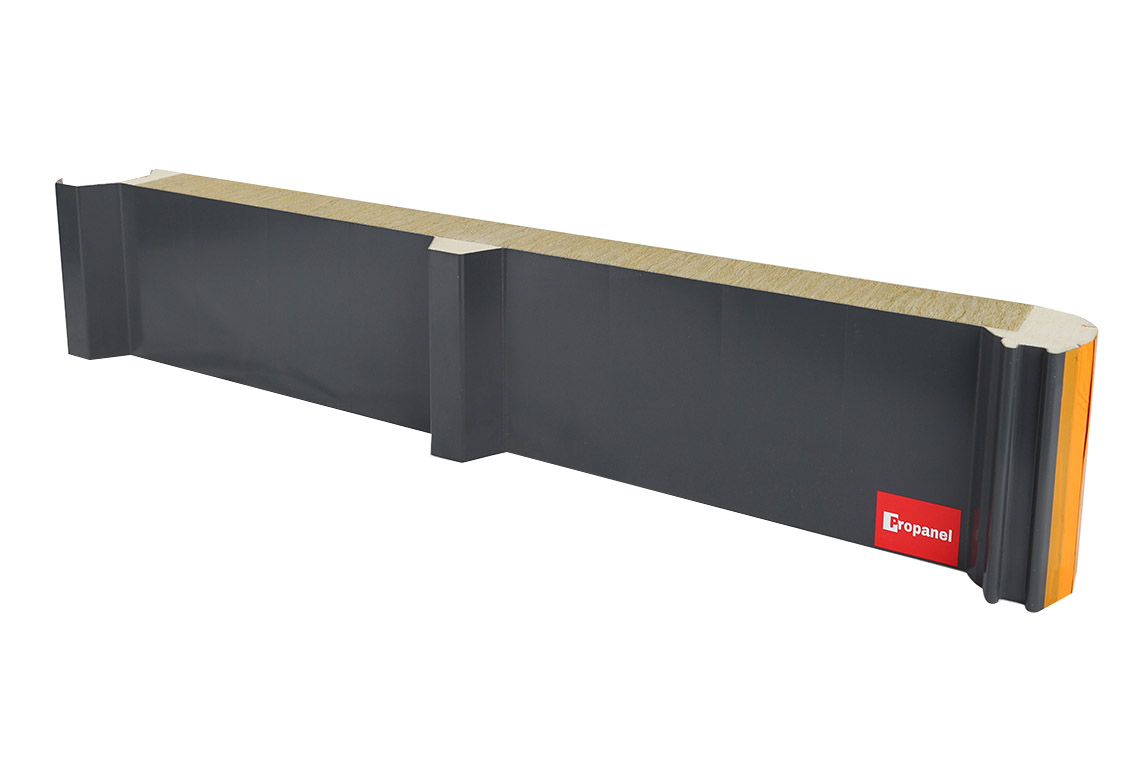
3. Panel Thickness: Matching Specs to Operating Temperatures Panel thickness must be strictly calculated based on your target operational temperature:
Under-specifying thickness guarantees a perpetual nightmare of surface condensation, ice buildup, and bleeding energy bills. Over-specifying simply wastes capital on unnecessary material.
4. Joint Integrity: Sealing Out Bacteria and Cold Loss Never overlook the panel joints. Cold air and microscopic bacteria will ruthlessly exploit any gap. Premium food-grade panels rely on deep, precision-milled tongue-and-groove edges. During installation, every single joint must receive a continuous, unbroken bead of specialized flexible sealant engineered to remain permanently pliable at sub-zero temperatures. The panel edges themselves must be fully protected during shipping and erection, as hidden dents and scratches inevitably transform into creeping rust spots and un-cleanable bacterial traps.

حقوق النشر
@ 2026 CHENGDU PROPANEL TECH CO., LTD. جميع الحقوق محفوظة
.  دعم الشبكة
خريطة الموقع / المدونة / XML / سياسة الخصوصية
Hi! Click one of our members below to chat on